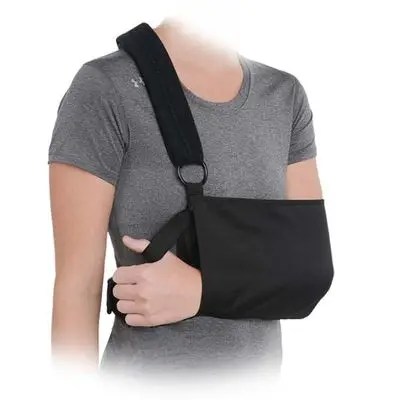

An arm sling is a supportive medical device designed to immobilize and support the arm, typically after an injury, surgery, or when recovering from a condition that affects the arm, shoulder, or wrist. Slings are commonly used to help reduce pain, prevent further injury, and facilitate healing by keeping the arm in a neutral and stable position.
Uses of an Arm Sling:
- Post-Surgery Recovery: After surgeries such as shoulder repairs, rotator cuff surgery, or elbow procedures, an arm sling helps immobilize the area and prevent unnecessary movement.
- Fractures: Used for fractures of the arm, collarbone (clavicle), or shoulder blade (scapula) to keep the arm stable while healing.
- Dislocations: A sling can help immobilize the arm after a shoulder or elbow dislocation, preventing further injury and allowing the joint to heal.
- Strains and Sprains: Slings provide support for muscles or ligaments that have been strained or sprained, limiting movement to promote healing.
- Chronic Conditions: Conditions like arthritis or bursitis may require the use of a sling to reduce strain on the affected joints.
SUGGESTED HCPC: N/A
ORDER NUMBER: 2211, 2213, 2215, 2217, 2218
SIZE: X-Small thru X-Large (see sizing chart to the left)
PRODUCT HIGHLIGHTS:
• Our most popular arm sling
• Velcro closure
• Easy to adjust
INDICATIONS: Arm injuries or instabilities post surgery.


Orthopedic Brace for Feet: Understanding Support, Stability, and Modern Foot Care Solutions
Orthopedic Brace for Feet: Understanding Support, Stability, and Modern Foot Care Solutions The feet are among the most hardworking parts of the human body. They provide support, balance, and mobility throughout daily activities, from walking and standing to participating in… Continue Reading…

Understanding Lumbar Sacral Orthoses (LSOs): A Guide to Lower Back Support and Stability
Understanding Lumbar Sacral Orthoses (LSOs): A Guide to Lower Back Support and Stability What Is a Lumbar Sacral Orthosis (LSO)? A Lumbar Sacral Orthosis (LSO) is a type of back brace designed to support the lower spine, specifically the lumbar… Continue Reading…

Adult Scoliosis Bracing: How Modern Support Systems Can Improve Comfort, Posture, and Mobility
Adult Scoliosis Bracing: How Modern Support Systems Can Improve Comfort, Posture, and Mobility Living with scoliosis as an adult can present daily challenges that affect comfort, mobility, and overall quality of life. While scoliosis is often associated with adolescents, many… Continue Reading…